How to vet a brand, and why the form matters
Seven questions to ask about any brand
I choose products one at a time, not brands wholesale. A company can make one product I trust and another I advise against, and my recommendation of the first is not a recommendation of the second. Companies get bought, and formulas change quietly after an acquisition, so I keep checking labels and I want to hear when a product disappoints you: help@supplementsforibd.com. If you prefer another well-tested brand of the same ingredient, that is a reasonable choice; the newest edition of this guide is the one to trust.
- How long has the brand been around? Longevity isn't quality, but a brand that has survived a decade of recalls has usually learned something.
- Does the company answer email? Ask for a certificate of analysis for a specific lot, including the contaminant panel: heavy metals, microbes, solvents. The speed and quality of the answer tells you most of what you need to know.
- Who owns it? Your favorite brand is probably owned by a very large corporation. Not disqualifying, but ownership changes tend to precede formulation changes, which is one reason I re-check every product at each edition.
- Is it third-party tested, and is the testing published? NSF, USP, Informed Choice, or a lab CoA you can read, not a logo that says "tested."
- What else is in it? Run the label against the previous page. Every additive should have a reason.
- Is there an excess of active ingredients? More is not better, and "proprietary blend" is a way of not telling you the dose of anything.
- What's the bioavailability story? For curcumin, quercetin, glutathione, butyrate, CoQ10 and the peptides, the form decides whether the label dose means anything.
Bioavailability: the forms you'll see in this guide
Scroll sideways to see every column →
| Form | What it does | Where it matters |
|---|---|---|
| Colloidal dispersion | Active milled to sub-micron particles, suspended with a gum so it stays dispersed in water. Theracurmin, the form in the Crohn's RCT. | Curcumin (trial form) |
| Phytosome | Plant compound bound to a phospholipid, which carries it across the gut wall. Meriva (the A-01 product), Casperome (C-02), Quercefit. | A-01 curcumin, C-02 boswellia |
| Liposomal | Active enclosed in a phospholipid bubble; protects fragile molecules from digestion. Quality varies. | C-11 glutathione, G-01/G-02 peptides |
| Enteric / targeted release | Coatings or matrices that delay release to the small intestine or lower gut. Essential for peppermint oil; used in the positive fish-oil trials; the whole problem for butyrate, otherwise absorbed before it reaches the colon. | H-01 peppermint, A-03 omega-3, F-02 butyrate |
| Triglyceride vs ethyl ester | Fish oil in its natural triglyceride form is absorbed better than the cheaper ethyl-ester concentrate, especially without a fatty meal. | A-03 omega-3 |
| SNAC | Salcaprozate sodium, an absorption enhancer for oral peptides (the carrier in oral semaglutide). Used in some BPC-157 capsules; the liposomal liquid matched here takes a different route. | G-01 BPC-157 |
A caveat on coatings. Coatings are additives too, and can irritate some people with IBD. If a coated product causes new symptoms and the uncoated one doesn't, believe your gut.
READ & SHOP
Explore related supplements


The Five
Curcumin
Curcumin is the yellow pigment of turmeric root and the most-studied plant compound in inflammatory bowel disease. It has randomized trials in ulcerative colitis, a…
Anti-Inflammatories
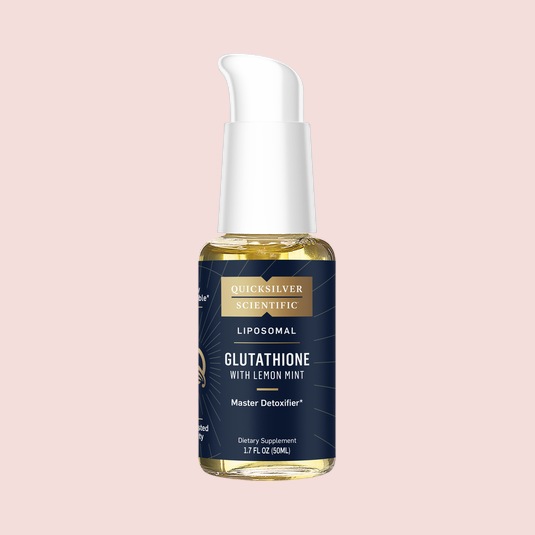
Glutathione (liposomal)
The body's master antioxidant: the tripeptide every cell makes to quench oxidative stress, detoxify, and recycle vitamins C and E, and it is measurably depleted in…


Barrier Repair
Butyrate
Butyric acid itself (not the sodium or calcium salt) in a sustained-release form designed to survive the small intestine and reach the colon, which is the entire…
Options to explore with your care team. These are not a recommendation to take them together. Andrew earns a commission on Fullscript purchases. US shipping only.