Why a gut guide has a brain section
People tell me the gut is the second brain. I always answer the same way: but the brain is the first brain. Three threads tie the nervous system to the gut wall, and each of them has a supplement or two worth knowing about. Read this page first; the products follow.
Stress, cortisol and the immune system
Cortisol is the body's own anti-inflammatory, which is exactly why prednisone works. But the system is built for short bursts. Under chronic stress, cortisol runs high for too long, the immune cells that should listen to it stop listening (a state researchers call glucocorticoid resistance), and the result is not less inflammation but more, and more disordered. Stress hormones also act directly on the gut: they loosen tight junctions, thin the mucus layer, activate mast cells in the wall, and change which bacteria thrive. In a prospective study of people with IBD, perceived stress was among the strongest predictors of a symptomatic flare in the following months. Trauma, early or recent, leaves this system on a hair-trigger; many of the people I work with can name the stressful season that preceded their diagnosis, and I can name mine. (refs 182–186)
Sleep is not optional in IBD
Sleep is when the immune system is retuned and the barrier is repaired. Poor sleep raises inflammatory cytokines in healthy people within days, and in people with IBD it does worse: in a large cohort, those with disturbed sleep while their Crohn's was quiet had roughly double the odds of active disease six months later. It runs both ways, of course, since night-time symptoms wreck sleep, but that is the point: a night of real rest is a treatment, and protecting it is worth more than most bottles in this guide. Melatonin (C-08) belongs to this conversation, and its entry explains why I treat it as a hormone to be used sparingly. The herbal formula on the next page is what I reach for instead.
Attention, dopamine and inflammation
Attention-deficit/hyperactivity disorder is more common in people with IBD than in the general population, and large registry studies keep finding the two together. Part of the link is shared genetics and part is life with a chronic illness, but part of it is chemistry: inflammatory cytokines reduce the synthesis and release of dopamine and blunt the brain's reward and motivation circuits, which is why sick people feel foggy, flat and unable to focus, and why a flare can feel like an ADHD flare too. Depression overlaps here as well; this guide does not address supplements for depression, and if that is where you are, please talk to your team. What the two amino acids in this section do is nudge the dopamine and calming systems from the supply side: L-tyrosine as the raw material for dopamine, L-theanine as the counterweight that keeps focus from turning into anxiety.
How to use this section
Everything here is a second-order move. Get the medical plan, the food, the movement and the five at the front of this guide in place first. Then, if sleep or stress or attention is the thing standing between you and a good day, these five are gentle, inexpensive and, in my experience, surprisingly effective. Two of them are part of my daily life; the rest are tools I keep in the drawer. The links between stress, sleep, attention and the gut are real; most of what we know is association and mechanism, not proof that a bottle changes the disease, and the pages that follow keep that distinction visible.
The brain that rewires, and why it matters for remission
Everything on this page is changeable, and that is the point of the section. The nervous system is plastic: connections that are used strengthen, connections that are not are pruned, and the stress axis, the sleep rhythm and the attention system are all built from such connections. A brain that has spent years on a hair-trigger was trained there, by circumstance, and it can be trained back. That is not a metaphor. It is long-term potentiation and long-term depression, the two cellular mechanisms drawn on the page "How a connection strengthens," and the growth factor BDNF (brain-derived neurotrophic factor) that governs both, which rises with sleep, movement, learning and time in a rich environment and falls under chronic inflammation and stress.
This is the idea Systema Health is built on. A person with IBD is not a gut with a problem; they are a whole system that has adapted, and adaptation runs in both directions. The five products in this section are small levers on that system. The large levers are the ones you already know: a protected night of sleep, a body that moves outdoors, a practice that quiets the stress axis for twenty minutes a day, work and relationships that do not run you at redline, and the patience to let new wiring form, which takes weeks and months rather than days. When people ask me what human potential has to do with a gut disease, this is the answer. The wall you have read about heals in a body whose nervous system has stopped sounding the alarm, and that nervous system can be taught.
READ & SHOP
Explore related supplements


Anti-Inflammatories
Melatonin
Not just a sleep hormone, the gut makes far more melatonin than the pineal gland, and it acts on the gut wall directly. A randomized UC trial found melatonin as an…
Vitamins & Minerals
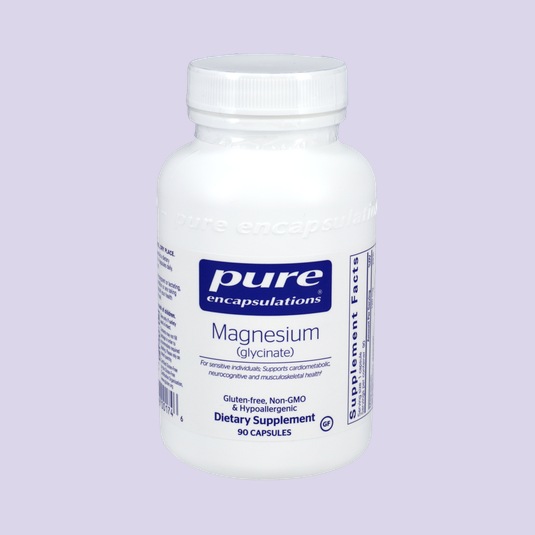
Magnesium
Magnesium glycinate, the form least likely to loosen stool, 120 mg of elemental magnesium per capsule with nothing else but the capsule and a trace of ascorbyl…


Sleep, Stress & Attention
Herbal sleep formula
An all-herbal formula built around passionflower, valerian, California poppy, skullcap and hops, with vervain, gotu kola and a trace of lavender, extracted into…
Options to explore with your care team. These are not a recommendation to take them together. Andrew earns a commission on Fullscript purchases. US shipping only.